KRISTIN LINKLATER
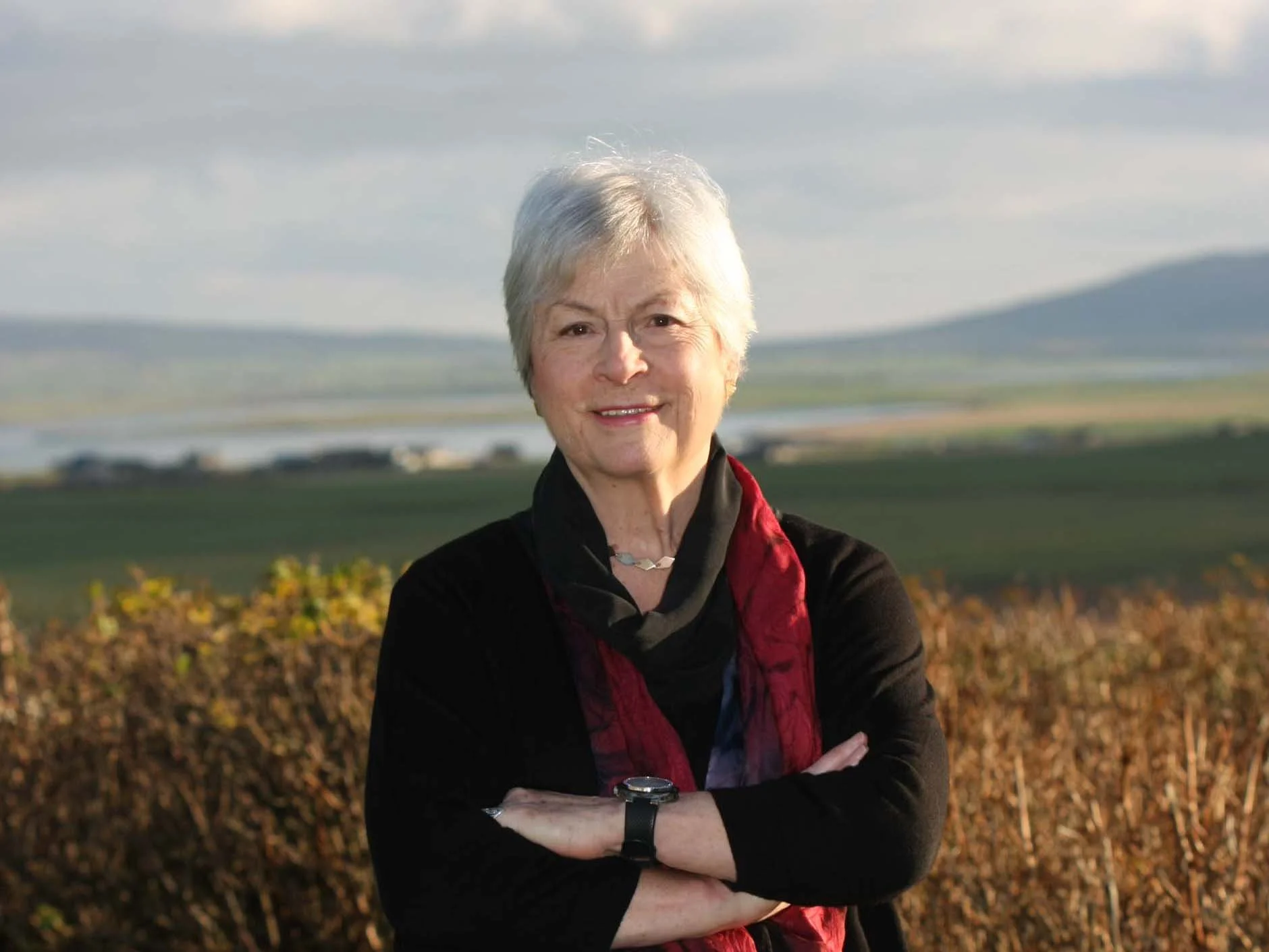
Kristin Linklater (1936–2020) was one of the world's most influential voice teachers, whose work transformed the training of actors and teachers across generations and continents. Through her pioneering approach to voice, language, imagination, and human expression, she helped redefine the field of voice studies and established a body of work that continues to shape theatre training around the world.
Born and raised in Orkney, Scotland, Kristin trained as an actor at the London Academy of Music and Dramatic Art (LAMDA), where she studied with the renowned voice teacher Iris Warren. Warren's belief that voice training should reveal the person rather than impose technique became the foundation of Kristin's life's work. After training as a voice teacher under Warren's guidance, Kristin taught at LAMDA before moving to New York City in 1963.
Over the following five decades, Kristin became a leading force in actor training and voice pedagogy. She served as Master Teacher of Voice in New York University's Graduate Theatre Program and worked as a vocal coach with many of the most influential theatre companies of her time, including the Stratford Festival, the Guthrie Theater, the Lincoln Center Repertory Company, the Open Theater, and the Negro Ensemble Company. During these years she was also influenced by and collaborated with some of the most important artistic and educational innovators of the twentieth century, including Moshe Feldenkrais, Jerzy Grotowski, Peter Brook, Joseph Chaikin, and practitioners of the Alexander Technique.
In 1976, Kristin published Freeing the Natural Voice, a groundbreaking text that challenged conventional approaches to voice training and introduced a holistic process for developing a free, responsive, and expressive voice. The book would become one of the most influential works in the field and remains a cornerstone of actor training today. Her second major publication, Freeing Shakespeare's Voice (1992), further expanded her exploration of the relationship between voice, language, and text.
In 1978, Kristin co-founded Shakespeare & Company with Tina Packer in Lenox, Massachusetts, helping to create one of North America's most influential centers for Shakespeare performance and training. She later taught at Emerson College, where she co-founded The Company of Women with Carol Gilligan, using Shakespeare as a vehicle for artistic exploration, leadership, and empowerment. In 1997, she joined the faculty of Columbia University, where she served as Professor of Theatre Arts until her retirement as Professor Emerita in 2013.
At the heart of Kristin's work was a profound belief that every human being possesses a natural voice capable of expressing the full range of thought, feeling, imagination, and experience. Her teaching sought not to manufacture a voice, but to remove the physical, emotional, and habitual barriers that inhibit authentic expression. This philosophy became the foundation of what is now known internationally as the Linklater Voice Method.
Kristin's influence extended far beyond her own teaching. Through a rigorous teacher-training process developed over many decades, she trained and mentored an international community of voice teachers who continue to teach, develop, and expand her work throughout the world. Her books have been translated into multiple languages, her methods are taught in leading conservatories and universities internationally, and her ideas continue to influence actors, educators, speakers, and artists across disciplines.
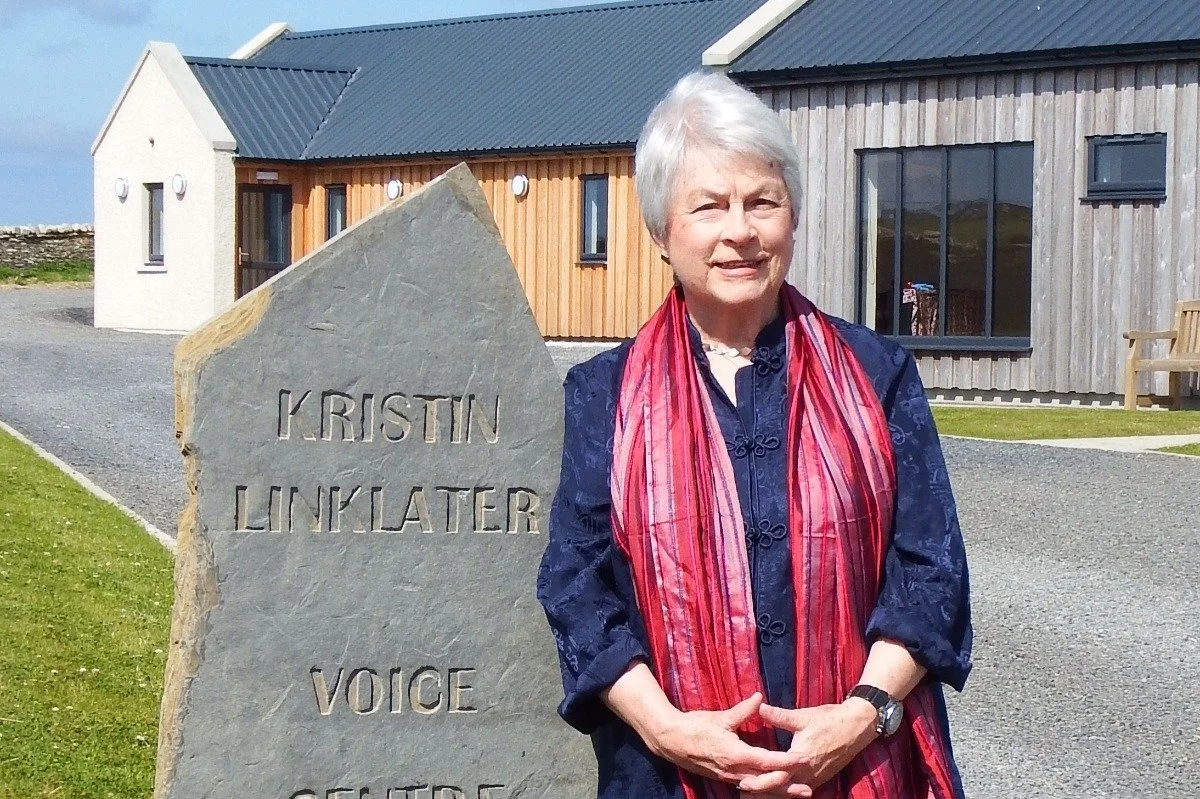
Throughout her life, Kristin maintained a deep connection to Orkney. Following her retirement from Columbia University, she returned to her native islands and established the Kristin Linklater Voice Centre at Housegarth in Quoyloo, creating a place for immersive exploration of voice, language, text, and creativity. In 2017, she was named an Honorary Fellow of the University of the Highlands and Islands in recognition of her extraordinary contribution to theatre, education, and the spoken voice.
Today, Kristin Linklater's legacy lives on through her writings, her students, her teachers, and the global community of practitioners who continue to share her belief that a free voice is fundamental to human connection, communication, and artistic expression.
I want to hear the person,
not the voice.
Kristin Linklater
-
![]()
1963
In 1963 Kristin moved to the United States, opening her private studio in New York City. She was Master Teacher of Voice in the New York University Graduate Theatre Program (now the Tisch School of the Arts) from 1965 to 1978. From 1964 to 1978 she worked as vocal coach at the Shakespeare Festival in Stratford, Ontario, the Tyrone Guthrie Theatre, the Lincoln Center Repertory Company, the Open Theater, the Negro Ensemble Company, the Manhattan Project and on Broadway.
-
![]()
1978
In 1978 she was a co-founder with Tina Packer of Shakespeare & Company in Lenox, Massachusetts. Kristin left New York with her two-year old son Hamish for the Berkshires where she lived, teaching and acting with Shakespeare & Company for the next twelve years.
-
![]()
1990
In 1990 she moved to Boston to teach at Emerson College. While based in Boston she created and co-directed with Carol Gilligan the Company of Women, an all-female Shakespeare company which ran workshops for women and girls and created all-women productions of Henry V and King Lear.
Photo: Emerson College Archives
-
![]()
1997
In the fall of ’97 she moved back to New York City as Professor of Theatre Arts at Columbia University.
-
![]()
2005
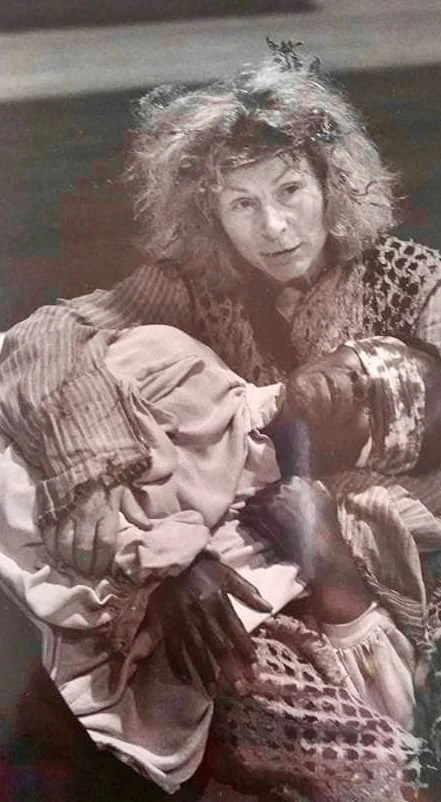
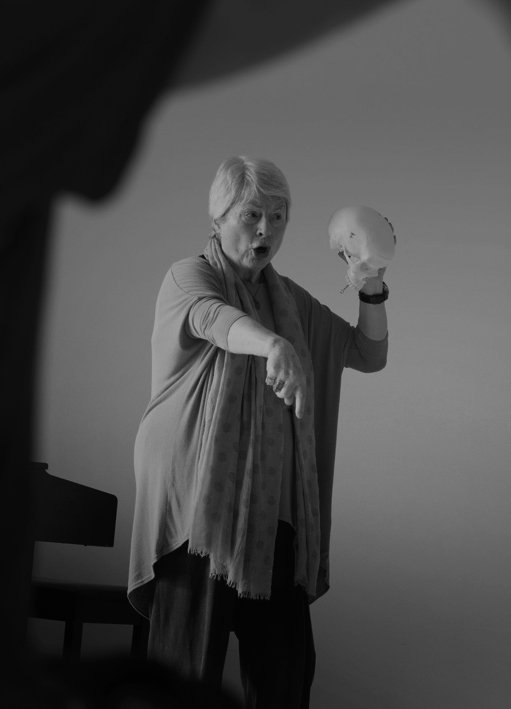
As an actor, Kristin Linklater played many of Shakespeare’s women (Lady Macbeth, Maria, Queen Margaret, Emilia, the Nurse, Titania) and a few of his men (notably King Lear). She created and performed solo pieces, played in experimental theatre productions (Clytemnestra’s Tears and Ovid’s Metamorphoses) and appeared as Euripides’ Hecuba at the Culture Project NY in 2005.
-
![]()
2013
In 2013 Kristin retired from Columbia as Professor Emerita and returned to her native Orkney where in 2017 she was proud to be made an Honorary Fellow of the University of the Highlands and Islands. In 2014 the Kristin Linklater Voice Centre opened its doors as a fully residential voice retreat centre offering a variety of voice and text courses throughout the year.
-
![]()
2020
Kristin passed away in Orkney, her dog Dandy at her side, on June 5th, 2020.